






The Usha Effect: How One Woman Inspired 100+ Indian Female Sprinters
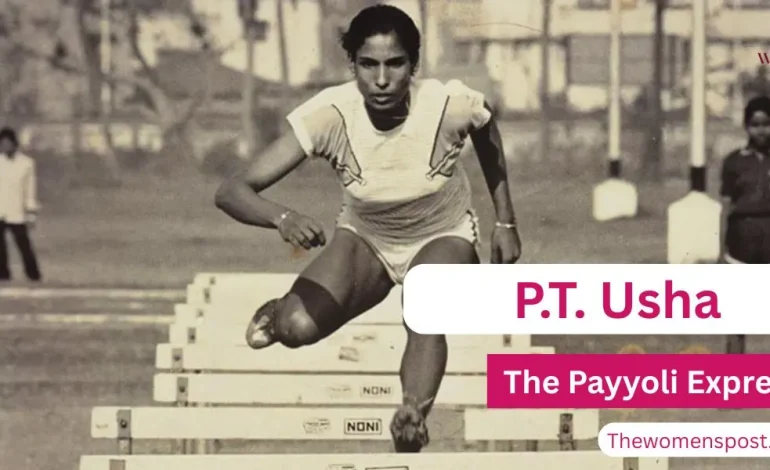

In the dusty villages of Kerala, where coconut trees oscillate under the scorching sun, a young girl named Parathuvayalil Thampi Usha had once fantasized about outrunning the world. Born in 1964 to an ordinary family in Payyoli, she laced up her plain shoes and sprinted in paddy fields, dreaming of a future no one believed was possible for girls like her. Today, that girl—the “Payyoli Express”—is a legend. But her tale is not of medals or records alone. It is of the “Usha Effect,” an unseen revolution in which one woman’s speed ignited a fire in more than 100 Indian women sprinters, turning imagination into gold and obstacles into shattered chains. How P.T. Usha ignited the Indian women sprinters is the essence of this story. P.T. Usha, whom the world knew her as, didn’t merely run quickly.
She ran for all the girls who were instructed to remain indoors, to cook or tend to siblings rather than pursue horizons. Her story illustrates how sports can bring women up, particularly in a nation where the conventions tend to clip wings before they unfold. P.T. Usha’s impact goes much beyond the tracks by 2025. As head of the Indian Olympic Association and a Rajya Sabha member, she battles for equal opportunities in sports. But the essence of her legacy is in the young runners she has guided—hundreds of them, many of them sprinters who attribute their first step, their first victory, and their indomitable spirit to her. The Usha impact on Indian women’s sprinting continues to increase.
The Woman Who Outran the Odds
Also Read: The Future Of Women’s Sports: Trends And Innovations
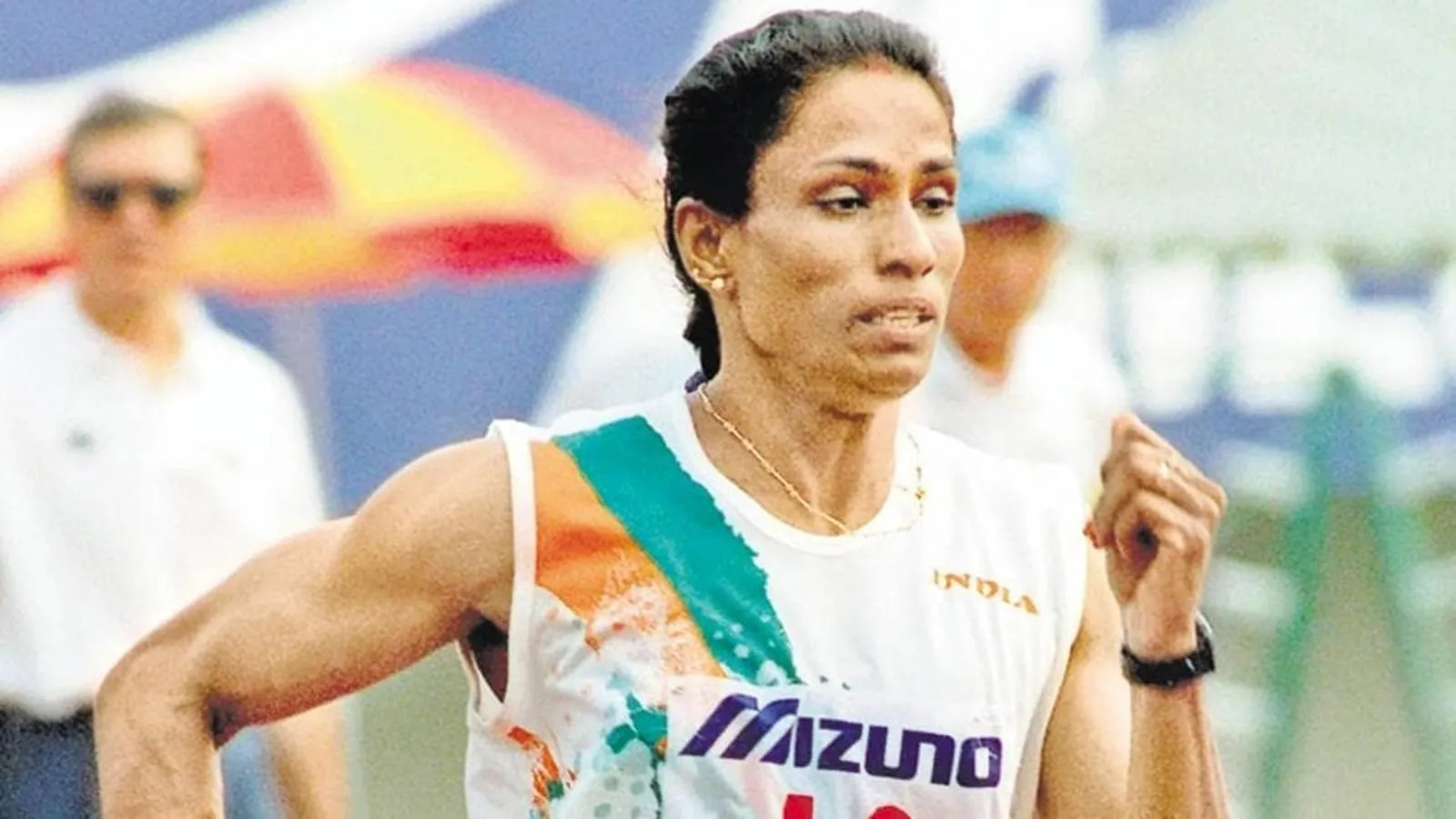
P.T. Usha’s own career started modestly. At 12 years old, she enrolled at a local sports club, coached by O.M. Nambiar. Barefoot on uneven grounds, she developed a speed that amazed all. By 1980, at 16, she captured her first national gold in the 200 meters. The world sat up and took notice a short while later. In the 1982 Asian Games, she won four medals, two of them golds. The 400m hurdles, her pet event, became her crown.
The 1984 Los Angeles Olympics Moment
The 1984 Los Angeles Olympics etched her name forever.
In the women’s 400m hurdles final, P.T. Usha crossed the line in 55.42 seconds—fourth place, missing bronze by a heartbreaking 0.01 seconds. India wept with her that day, but the near-miss fueled a fire. She went on to claim over 100 international medals, four Asian Games golds, and records that stood for decades. Nicknamed the “Golden Girl” for her shine, P.T. Usha ruled over Asian courses during the 1980s and 1990s. But there was more behind the success: substandard facilities, sexist prejudices, and a country that was reluctant to support women competitors. P.T. Usha retired in 2000, but she never actually stopped running—at least, not for others. In 2002, she established the Usha School of Athletics in Kozhikode, Kerala.
It was not a training center, however; it was a vow to rural girls. Free boarding, coaching, and nutrition to the poor—it made a 10-acre plot a launchpad. By 2025, the school has trained more than 300 athletes, of whom over 100 have been female sprinters. Many have been from villages such as P.T. Usha’s, where sport used to be a game of boys. Her maxim? “Run like the wind, dream like the stars.” And they do. P.T. Usha’s contribution to empowering Indian women in athletics shines here.
Illuminating the Way: Mentorship That Creates Champions
What is so powerful about the Usha Effect is the way it feels so personal.
P.T. Usha is not only teaching technique; she is telling stories of her rises and falls. Days at the school begin with drills in speed and strength, but nights arrive with lectures on confidence and courage. She says to girls, “I missed a medal by a blink, but I never missed my purpose.” This balance of stern training and gentle mentoring has given birth to stars who bear her torch.
Success Story of Hima Das
Like Hima Das, the “Golden Girl of Indian Athletics 2.0.” Born in 2000 in a flood-prone village in Assam, Hima worked in fields before finding running. At 18, she was the first Indian female to be a global sprint gold winner—at the 2018 World U20 Championships in the 400m. P.T. Usha was Hima’s idol, she frequently says so.
“Seeing her videos, I learned to overcome pain,” Hima has disclosed in interviews. P.T. Usha invited her to school for camps, honing her form and attitude. By the Paris Olympics of 2024, Hima anchored India’s 4x400m relay to a national record. Her triumph? A straight replication of P.T. Usha’s 1980s relay teams, in which teamwork orchestrated solos into symphonies.
The Journey of Dutee Chand
And then there’s Dutee Chand, India’s fastest living woman. Born into a family of weavers in Odisha, Dutee struggled with poverty and discrimination. Inspired by P.T. Usha used to compete in shorts when saris were the norm—Dutee started doing sprinting at the age of 13. She shattered national 100m records and won Asian Games silvers. But her greatest victory was off the track: In 2018, Dutee defied international rules on hyperandrogenism at the Court of Arbitration for Sport, opening the door for runners such as Caster Semenya. P.T. Usha supported her, providing guidance throughout the battle. “Dutee makes me remember my younger self—confident and unbroken,” P.T. Usha told ELLE in a 2025 interview. Now, Dutee coaches at P.T. Usha’s school, bringing the full circle.
Emerging Talents from the Usha School
Not all tales culminate in the Olympics. Take Anilda Thomas, an unsung Kerala gem. Coached at P.T. Usha’s school since 2015, she registered a personal best of 11.59 seconds in the 100m by 2024, securing national places. Or Tintu Luka, too, converted from middle distance to sprints through the watchful eyes of P.T. Usha, winning Asian medals. Over 50 women alumni from the school feature in national teams now, with sprinters Archana Suseendran and Salwa EAS creating ripples in relay events. These are women, more likely than not, from tribal or agricultural backgrounds. They attribute their success to P.T. Usha, not just speed—but to recognizing their potential when families did not.
Also Read: Trailblazers In Non-Conventional Sports: Women In Motorsports, Wrestling, And Others
Broader Influence Beyond the School
The influence of P.T. Usha transcends her school. As President of IOA since 2022, she advocates women-only camps and increased funding. In 2025, through her efforts, 20 female sprinters were given places at international competitions. She goes into villages, distributing spikes and optimism. “Every girl who runs is my medal,” she says. Her 2025 ELLE cover feature anointed her the “original sprint queen,” giving credit to her for guiding hundreds in a time when there was no social media to amplify voices.
The Larger Wave: Changing Lives and Sport
The Usha Effect is not merely about tracks; it’s a wave that’s changing Indian women’s sport. Not many girls wore sprint shoes before P.T. Usha; studies or marriage was what society wanted. Today, numbers have mushroomed. A 2024 research on Indian women in Commonwealth and Asian Games reported a 300% increase in women’s track entries since the 1980s, led by sprints. P.T. Usha’s life, inspires girls that they can become heroes.
Ongoing Challenges and Resilience
Challenges persist. Countryside roads have no lights; girls are neglected by coaches. Finances suffer—P.T. Usha fights for more, but change is gradual. Still, her sprinters show grit. Hima fought injuries and floods; Dutee, bans and discrimination. They race, they win, and come back to motivate the next generation. In 2025, P.T. Usha’s school honored its 100th woman graduate, a Manipur sprinter looking towards the 2028 Olympics.
A Legacy That Keeps Sprinting Forward
P.T. Usha turned 61 in June 2025, but her stride hasn’t slowed. She runs marathons for fun, coaches from dawn, and dreams of India’s first female sprint Olympic gold. The Usha Effect? It’s alive in every girl who lines up at the start, heart pounding, eyes on the finish. Over 100 sprinters—and counting—owe her their fire. In a world once told to “stay put,” P.T. Usha whispered, “Run free.” And they are, quicker than ever, carrying her pace into a brighter future.