



From Observation To Inspiration: How Women Convert Daily Challenges Into High-Growth Startups
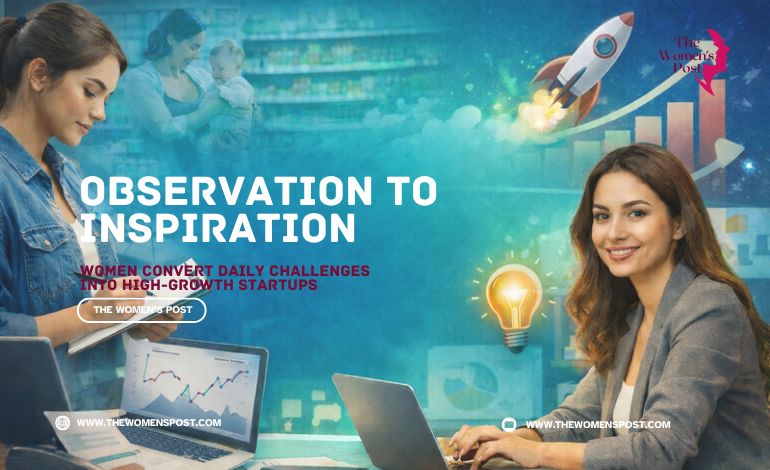

A lot of women have the tendency to be observant and identify common issues. For instance, while at work, a woman might experience the inconvenience of leaking menstrual pads, see a heart beat missed by the machine in the hospital, or a person looking confused during an interaction. The above experiences inspire innovative ideas. In most cases, high-growth start-ups emerge out of such observations that originate from empathy. Most innovations made by women stem from the challenges that they face in their day-to-day lives and not necessarily out of research alone. This section provides three global examples on how women turn common occurrences into startups.
Rana el Kaliouby and Affectiva: Bridging Emotions with Technology
One of the most inspiring success stories involves Rana el Kaliouby. Rana was born in Egypt and later moved to America for her education. In Cairo, warm smiles and close gestures felt natural. In the West, expressions seemed more reserved. This everyday cultural gap stayed with her. At the MIT Media Lab, she saw another side of the problem: people with autism often struggled to read facial cues. Why couldn’t technology help bridge that? In 2009, she co-founded Affectiva, a company that uses artificial intelligence to read human emotions from faces and voices.

The tech analyzes tiny muscle movements to detect joy, sadness, anger, or stress. It started as a research project but quickly grew into a tool used in cars for driver safety, in marketing to test ads, and in therapy to support emotional understanding. Affectiva became a leader in what is now called Emotion AI. The company reached millions of users worldwide before being acquired. Rana’s simple observation—that machines needed to understand feelings just like people do—turned into a multimillion-dollar innovation driven by empathy for how humans connect. This is a perfect example of how everyday observations become high-growth startups by women.
Also Read: The Rise Of Women In High-Growth And High-Impact Sectors
Miki Agrawal and Thinx: Reimagining Period Care
Another powerful example is in period care. Miki Agrawal, a woman who dealt with periods like everyone else, grew tired of the same old problems. Pads and tampons leaked during sports or long days, felt bulky, and created waste. One day, while racing in a family game with her twin sister, she had an accident that highlighted the daily hassle. Why couldn’t underwear itself handle periods comfortably? In 2013, she launched Thinx, period underwear made with special layers that absorb blood like a pad but look and feel like regular panties. No inserts, no leaks, and far less waste.

The product reimagined an industry stuck in the past. It broke taboos with bold ads that talked openly about menstruation. Women loved the freedom it gave them during work, travel, or exercise. Thinx grew fast, selling millions of pairs and expanding into schools and offices with free product programs. The company showed how women entrepreneurs spot opportunities in everyday life. It proved that reimagining basic care could build real loyalty and scale globally.
Fiona Brownfoot and Kali Healthcare: Making Fetal Monitoring Accessible
Accessibility in pregnancy monitoring offers a third inspiring case. In Australia, obstetrician Fiona Brownfoot saw the limits of fetal monitoring every day in her hospital work. Traditional machines required women to lie still in clinics for long stretches. This was hard for busy moms, impossible for those in remote areas, and stressful during telehealth visits. She wondered: Why not make monitoring as easy as wearing a smartwatch? Working with engineers, she co-founded Kali Healthcare in 2020.

The startup created a small, comfortable wearable device that tracks a baby’s heart rate and other signs from home using AI. It sends clear data to doctors without wires or hospital trips. The idea came straight from her clinical observations—pregnant women needed better, kinder tools, especially in rural or underserved places. Kali’s technology makes care more equal. It helps catch problems early, reduces unnecessary visits, and gives peace of mind to families everywhere. What began as a doctor’s daily frustration with outdated equipment is now growing into a solution that could transform maternal health worldwide. This journey reflects From daily frustration to high-growth startup: women’s innovation journey.
Also Read: Why Are Women 47% More Likely To Close Businesses?
Common Patterns in Women’s Innovation Journeys
These stories share a clear pattern. Each woman started with empathy—really seeing the struggles of daily life—and paired it with sharp observation. Rana noticed emotional gaps across cultures. Miki felt the annoyance of old period products. Fiona lived the inconvenience of hospital-only monitoring. None waited for someone else to fix things. They asked simple questions like “Why is this still so hard?” and built solutions that scaled. Their startups did not just sell products; they created impact. Affectiva humanizes technology. Thinx frees women from period shame. Kali brings expert care to more mothers. In each case, creativity grew from real empathy, not abstract ideas. This clearly demonstrates how women turn everyday observations into startups and highlights the power of Women in innovation.
Key Lessons from These Founders
- Each woman started with empathy—really seeing the struggles of daily life—and paired it with sharp observation.
- None waited for someone else to fix things.
- They asked simple questions like “Why is this still so hard?” and built solutions that scaled.
Challenges and the Bigger Truth
Of course, turning an observation into a high-growth company takes more than a good idea. These founders faced funding challenges, doubts, and the hard work of building teams. Yet their success shows a bigger truth. When women lead with insight from everyday life, innovations feel more human and reach further. They solve problems that matter because they come from lived experience. In a world full of complex tech, these stories remind us that the best ideas often start small—at the kitchen table, in a doctor’s office, or during a simple conversation. It beautifully captures how everyday observations become high-growth startups by women.
Also Read: The Economic Case For Closing The Gender Gap In Entrepreneurship
Conclusion: The Power of Observation and Empathy
From emotion-reading AI to fresh period care and smart fetal monitors, women continue to prove that observation plus empathy equals real change. Their journeys from idea to impact inspire others to look closer at their own world. The next big startup may already hide in someone’s daily routine, waiting for the right person to notice. This is the essence of how women entrepreneurs spot opportunities in everyday life and the true meaning of From daily frustration to high-growth startup: women’s innovation journey.
Women in innovation continue to lead the way. Women in innovation show us new paths every day. Through their work, Women in innovation prove that real change starts with simple observations. More than ever, Women in innovation are shaping the future. The rise of Women in innovation inspires countless others. Truly, Women in innovation turn ordinary moments into extraordinary businesses. At its heart, Women in innovation is about empathy meeting opportunity.