






Citigroup: The Global Financial Powerhouse Redefining Modern Banking

Introduction Banking That Spans the Globe
In a world driven by global capital flows, cross-border trade, and complex financial needs, few institutions are as deeply woven into the fabric of global finance as Citigroup. As one of the largest and most global banks in existence, Citigroup offers a broad array of services from personal banking to institutional finance, wealth management to investment banking in virtually every corner of the world.
With a legacy that traces back more than two centuries, Citigroup has evolved through waves of innovation, expansion and restructuring. Today, under dynamic leadership, the bank is reimagining what global banking can be: simpler, faster, more efficient, and deeply integrated with global commerce and personal finance.
What Citigroup Is Scope, History & Global Footprint
Origins & Corporate Evolution
- Citigroup’s roots go back to 1812 (originally as City Bank of New York). Its modern form, however, was established in 1998 through the merger of Citicorp (holding company for Citibank) and Travelers Group.
- The merger aimed to create a global financial-services powerhouse combining retail banking, credit cards, investment banking, insurance, and institutional services under one roof.
- Over time, the company refined its business model, focusing on core banking and global services, shedding non-core operations when needed allowing it to adapt to changing market realities.
Global Presence & Scale
- Citigroup is truly a global institution operating in 140+ countries and jurisdictions worldwide.
- As a multinational banking institution, it features prominently among the biggest banks in the U.S. by assets, and globally among major investment banks.
- Through its reach, Citi serves a vast variety of clients: retail customers, credit-card holders, small and large businesses, multinational corporations, institutional investors, governments and more.
What Citigroup Does Core Businesses & Services
Citigroup delivers a broad suite of financial services grouped under two major divisions offering flexibility, depth, and global reach.
1. Institutional & Corporate Services (ICG + Markets + Treasury & Trade)
- Investment Banking & Capital Markets: Underwriting, advisory, capital raising, securities sales, and more.
- Corporate Banking & Treasury & Trade Solutions (TTS): Cash management, trade finance, cross-border payments, liquidity services critical for global firms operating across markets.
- Markets & Securities Services: Fixed income, equities, derivatives, custody services, prime brokerage, and institutional-grade trading and execution capabilities.
- Global Institutional Services: Serving governments, corporations, institutional investors with global reach and sophistication.
2. Personal Banking, Retail & Wealth Management (PBWM + Citi retail brands)
- Retail Banking & Credit Cards: Through its retail banking operations and credit-card business, Citigroup offers everyday banking, savings, credit, and card-based services.
- Wealth Management & Private Banking: For high-net-worth clients, Citi provides investment advisory, private banking, asset management and wealth-planning services.
- Global Banking Solutions: For individuals and small businesses offering services across different countries, currencies, and regulatory regimes.
3. Integrated, Cross-Border Capabilities
One of Citigroup’s distinctive strengths is its global nature. It can support clients whether retail, corporate or institutional with cross-border banking, multi-currency services, global cash flow management, and cross-jurisdiction financial operations. This makes it especially valuable for multinationals, expatriates, frequent travelers, and globally-oriented enterprises.
Leadership & Governance Who Steers Citigroup
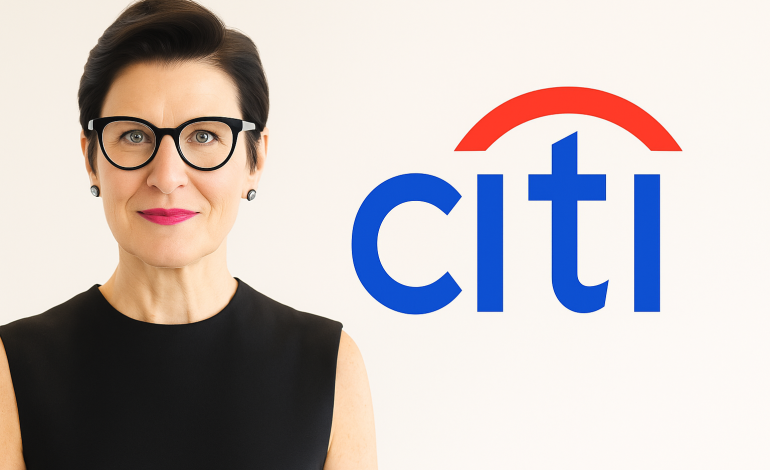
Jane Fraser Chair & CEO
At the helm of Citigroup is Jane Fraser, appointed Chief Executive Officer in March 2021, and in October 2025 additionally elected Chair of the Board. She is the first woman ever to lead a major Wall Street bank, a milestone that underscores both Citi’s legacy and evolving identity.
Career & Leadership Path
- Jane Fraser joined Citi in 2004 in the Corporate & Investment Banking division. Over the years she held senior roles including Global Head of Strategy & M&A, CEO of Citi Private Bank, CEO of CitiMortgage & U.S. Consumer Banking, CEO of Citi Latin America, and President of Citi before becoming CEO.
- Her background (with degrees from Cambridge University and Harvard Business School) and prior experience (including time at McKinsey & Company) equip her with global perspective, strategic acumen, and leadership gravitas.
Vision & Strategic Priorities
- Since taking over, Fraser has driven a multi-year transformation strategy aimed at simplifying operations, strengthening risk controls, improving efficiency, and aligning Citi more closely with global clients’ needs.
- Under her leadership, Citi closed significant international consumer businesses that lacked scale, restructured internal operations, improved governance, and reoriented the bank toward areas where it can competitively excel including wealth, corporate banking, and global institutions.
- Her leadership has also emphasized resilience, regulatory compliance, innovation, technology adoption, and global-standard banking operation necessary in a world of evolving macro and financial risks.
Corporate Structure & Public Ownership
- Citigroup is a publicly traded company (NYSE: C). It does not have a single “owner.” Instead, its ownership is distributed among millions of shareholders from institutional investors to individual retail investors.
- Governance is overseen by a Board of Directors, which under Fraser’s chairmanship provides oversight, strategic direction, and aligns leadership with shareholder interests, regulation, and global banking responsibilities.
Why Citigroup Matters Influence, Trust & Global Relevance
🌍 Global Reach & Integration
Citigroup stands out among global banks for its breadth and depth of services across multiple continents, markets, and customer segments. Whether a small business in Asia, a multinational corporation in Europe, or an individual in the United States Citi’s global structure allows it to deliver banking, payments, wealth, and corporate finance services across borders seamlessly. This cross-border capability is central to modern global commerce.
⚙️ Versatility & Service Breadth
Few banks combine retail banking, credit cards, wealth management, corporate banking, investment banking, treasury and trade services, global securities services under one brand as comprehensively as Citi. This vertical and horizontal integration makes it a one-stop financial partner for many kinds of clients from everyday consumers to global corporations.
🧑💼 Leadership, Governance & Transformation Focus
Under the leadership of Jane Fraser and a newly streamlined governance model, Citi aims to be not just a large bank but an efficient, forward-looking global institution tuned to the demands of the 21st century: compliance, risk-management, digital banking, globalization, and inclusion. That long-term transformation helps build trust and stability, which are crucial for a systemically important financial institution.
🔄 Adaptability & Resilience
Citigroup’s history of growth, challenges, restructuring, and reinvention demonstrates its ability to adapt. From old-school banking to modern global finance and digital evolution, Citi continues evolving with market demands. That adaptability is a key strength in a world of rapid economic, regulatory, and technological changes.
Challenges & What to Watch
Like any global financial giant, Citigroup faces inherent challenges:
- Regulatory environment & compliance burdens global banking means navigating diverse regulations, currency risks, and compliance across jurisdictions.
- Competition & profitability pressures from other global banks, fintech, digital-first challengers, and shifting consumer behaviors.
- Complex legacy & transformation risks large restructuring efforts can be disruptive, and success depends on execution, governance, and sustainable strategy.
- Global macroeconomic and geopolitical volatility economic downturns, interest-rate fluctuations, global trade shifts, and currency risks affect global banks strongly.
Nevertheless, under strong leadership and with its scale and diversity, Citi is positioned to manage these challenges while continuing to serve a wide global clientele.
Conclusion A Bank for a Globalized Age
Citigroup is more than a bank it is an institution built for a globalized world: offering products and services that span continents, currencies, and markets. Under the leadership of Jane Fraser, Citi is striving to be simpler, smarter, and more responsive bridging retail banking, global commerce, wealth management, and institutional finance under one roof.
For individuals, companies, governments, and investors seeking a banking partner with global reach, regulatory experience, and comprehensive service breadth Citigroup remains a leading contender. As global financial flows, cross-border trade, and interconnected markets grow, Citi’s role remains vital.
In short: Citigroup is not just redefining modern banking it is shaping the future of global finance.