






Why Are Women 47% More Likely To Close Businesses?
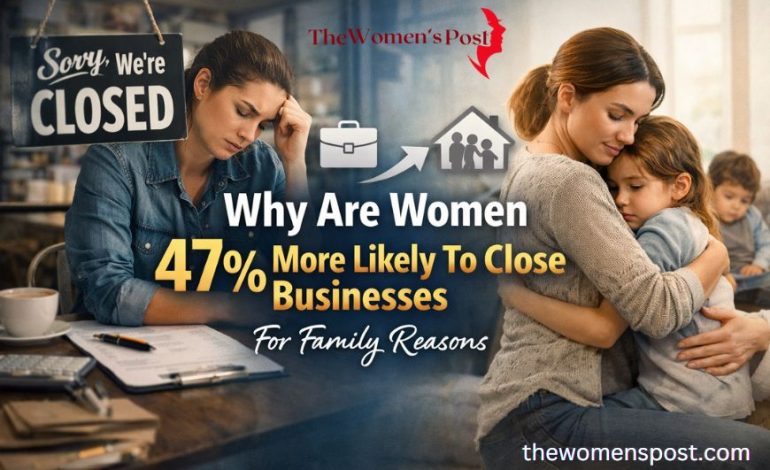

A recent global study has thrown a surprising fact into the spotlight: Why are women 47% more likely to close their businesses for family reasons? It has been found that women are 47 percent more likely to close their businesses for family and personal reasons compared to their male counterparts. In 2024, across 51 countries and more than 161,000 adults, 21 percent of women who closed their businesses cited family and personal reasons, while only 14.3 percent of males cited the same reasons for closing their businesses.
While women and males were almost equally likely to close their businesses overall, at 3.4 percent and 3.8 percent respectively, women and males differ significantly in the reasons they cited for closing their businesses. For women, closing a business is not just about money and markets; it is also about the daily pull of home and family life. Female founders and their caregiving responsibilities contribute significantly to this fact.
The Key Statistic: Women 47% More Likely to Exit for Family Reasons
The top reason both groups gave for closing was “business not profitable.” But family reasons ranked second for women and only fourth for men. This shows a clear pattern: for men, running a business is often one choice among many. For women, it can feel like the only option in tough job markets, yet family duties make it harder to keep going. Reasons women entrepreneurs close their businesses family responsibilities are deeply tied to this extra burden.
What Causes This Gender Gap in Business Closures?
Also Read: The Economic Case For Closing The Gender Gap In Entrepreneurship
So what exactly causes this difference? The answer lies in the extra load many women carry at home. Female founders’ caregiving responsibilities often become the deciding factor when tough choices arise.
Caregiving Responsibilities Take Center Stage
First, caregiving takes center stage. Women around the world still handle most of the work of raising children, caring for aging parents, and managing household chores. When a child gets sick, school holidays arrive, or an elderly relative needs help, the business owner who is also the main caregiver must step away. This “second shift” of unpaid work at home eats into time that could go toward customers, marketing, or planning. Female founders’ caregiving responsibilities create real limits on how much energy can go into the business.
Cultural Expectations and Lack of Support Systems
In many cultures, society still expects women to put family first. Even when a woman loves her business, the pressure to be the perfect mother, daughter, or wife can feel stronger than the drive to keep the company open. In middle-income countries, where formal support like paid leave or cheap childcare is often missing, this pressure hits hardest. There, nearly 23 percent of women cited family reasons for closing—almost 60 percent more often than men. Female founders’ caregiving responsibilities explain much of this higher rate.
The Vicious Cycle: Family Duties and Declining Profits
Family duties and money problems often feed each other. When a woman spends hours on care work, she has less time to grow sales or chase new clients. Profits drop. Then the business feels less worth the struggle, and closing becomes the only way to protect family peace. The impact of caregiving on women entrepreneurs’ business survival is clear in these cycles.
Regional Differences: Where the Gap Is Largest
North America shows the biggest gap. There, women were more than twice as likely as men to close for family reasons (22.6 percent versus 9.8 percent). In some countries, the numbers flip, but the worldwide trend stays clear: women carry the heavier family load. Global entrepreneurship monitor women family reasons business closure data highlights this ongoing pattern.
Also Read: The Role Of Women Entrepreneurs In Promoting Diversity, Innovation, And Social Change
This Is Not a New Pattern
This is not a new story. Earlier reports showed similar patterns—around 18 percent of women exiting for family reasons in past years. The latest data simply confirms that the gap has not closed much, even as more women start businesses than ever before. Female founders’ caregiving responsibilities continue to shape these outcomes year after year.
The Personal Impact on Women Entrepreneurs
What does this mean for women entrepreneurs? Many feel torn. They launch companies to gain freedom, earn better money, or follow a dream. Yet the same family that inspires them can force a painful choice. Some step back temporarily and try again later. Others walk away for good, worried that the stress will harm their loved ones. Reasons women entrepreneurs close their businesses and family responsibilities often lead to these hard decisions.
Broader Consequences for Communities and Economies
The effects reach beyond one family. When women close businesses at higher rates, whole communities lose jobs, ideas, and role models. Economies miss out on the creativity and growth that female-led firms bring. Women entrepreneurs often focus on social good and sustainability more than men do. Losing them slows progress on bigger goals like reducing poverty or protecting the environment. The impact of caregiving on women entrepreneurs’ business survival affects entire communities too.
How Men’s Business Exits Differ
Men face family pressures too, but the numbers tell us the weight falls differently. Men are more likely to close because they found a new job, retired, or saw another opportunity. Their exits often feel like steps forward. Women’s exits, by contrast, can feel like a step back forced by duty.
Practical Solutions to Support Women Entrepreneurs
So what can change this picture? Several practical steps can help.
Government and Community Actions
Governments and communities can start by making childcare and eldercare more affordable and available. Flexible work rules, shared parental leave, and tax breaks for family-friendly businesses would help. Training programs that teach women how to build teams or use digital tools can free up their time.

Also Read: How Women Entrepreneurs Promote Diversity And Use Evolved Leadership Styles
Role of Investors and Support Networks
Investors and support groups can do more too. Women-led businesses still get less funding. Creating networks where women invest in other women has already shown promise—women are 2.5 times more likely to back other women. Mentorship that understands real life, not just business plans, makes a difference.
Business Accelerators and Corporate Programs
Companies and accelerators should offer programs built around life stages—maternity support, flexible scaling plans, and mental health resources. The goal is simple: let women keep their businesses running without choosing between family and success.
Signs of Progress and Remaining Challenges
Progress is happening. Women’s startup rates have risen 76 percent over the past 20 years in many places. In 18 countries, women now match or lead men in high-growth ventures. But the family barrier remains stubborn.
It is time to tackle the social pressures and structural obstacles that hold women back. One-size-fits-all solutions will not work. Support must fit local realities—whether that means better village childcare in low-income countries or AI tools for busy moms in high-income cities.
Final Thoughts: Closing the Gap for Good
In the end, the 47 percent gap is not about women lacking drive or skill. It is about systems that still ask them to do two full-time jobs at once. When societies lighten that load—through policy, culture shifts, and practical help—more women will not only start businesses but keep them thriving.
Families will benefit. Economies will grow stronger. And the next generation of girls will see that running a successful business and caring for loved ones do not have to be enemies. They can go hand in hand.
The data is clear. The reasons are known. Now the real work begins: building a world where women entrepreneurs can stay in the game for the long haul, without paying an unfair family price.