

Anya Cheng’s Vision for Taelor: Where AI Meets Style, Confidence, and Sustainability
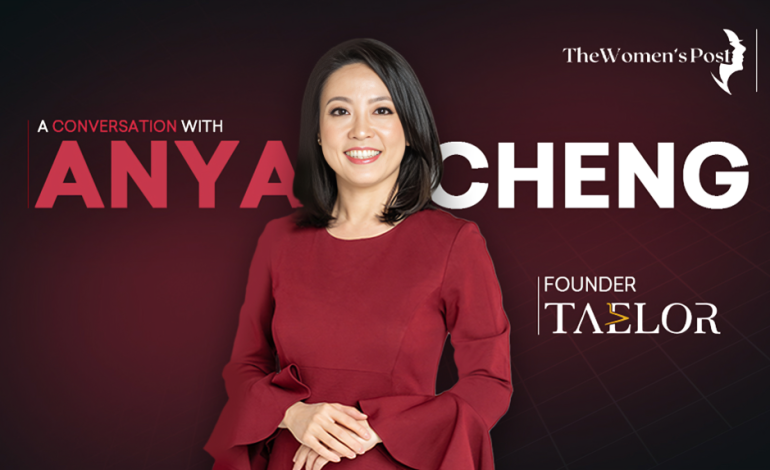

We recently had the privilege of interviewing Anya Cheng, founder of Taelor, an AI-powered men’s fashion rental platform redefining how busy professionals dress with less waste, less effort, and more confidence.
With an impressive background spanning leadership roles at Meta, eBay, McDonald’s, and Target, Anya Cheng has built and scaled products that have reached millions and in some cases, billions of users. Today, she brings that same product innovation mindset into the fashion world, combining AI personalization, circular commerce, and real-time demand intelligence to tackle one of the most wasteful industries on the planet.
As a TEDx speaker, best-selling author, educator, and award-winning product builder, Anya Cheng’s work is not only shaping the future of fashion, it is shaping the future of how AI-driven products are built with empathy, impact, and purpose.
The Spark Behind Taelor
We started the interview by asking:
Women’s Post: Taelor has been described as an AI-powered solution at the intersection of fashion, technology, and sustainability. What inspired you to launch it, and how do you see AI transforming the future of fashion?
Anya Cheng shared:
Taelor was inspired by two simple but powerful observations.
First, most men want to look sharp, but they don’t want to spend time shopping or thinking about what to wear.
Second, the fashion industry is one of the world’s most wasteful industries, with nearly 30% of clothing going directly from factory to landfill.
I saw an opportunity to solve both problems by combining AI personalization, circular fashion, and AI-driven demand intelligence. This led to a mission to create a smart and sustainable solution in which Taelor helps busy professionals save time with a personalized men’s clothing rental subscription while giving fashion brands real-world data to predict demand more accurately and reduce overproduction.
AI is transforming fashion by becoming a true co-pilot for both consumers and brands. It enables hyper-personalized recommendations, demand forecasting (how much to make), and needs forecasting (what styles, sizes, and fits people actually want).
At Taelor, our AI doesn’t just analyze user preferences. It also learns from proprietary data, including upcoming trends from over 100+ brand partners, real wear-and-tear quality data from our rental inventory, and customer feedback across thousands of rental shipments.
This blend of data and human insight creates an experience that feels both intelligent and deeply personal. It helps people reach their goals effortlessly while enabling brands to test products learn faster, and reduce future waste.
That, to me, is the future of fashion: circular, personalized, data-driven, and accessible to everyone, not just those who love fashion.
Lessons from Fortune 500 Leadership
Women’s Post: You’ve held leadership roles at Meta, eBay, McDonald’s, and Target before becoming a founder. What did you learn from building products at Fortune 500 companies that prepared you to scale a startup?
Anya Cheng reflected:
Each role gave me a different lens on how to scale innovation.
At Meta, I learned how to launch and scale new commerce products, like Facebook and Instagram Shopping, to billions of users. At eBay, I saw firsthand how to design for emerging markets with radically different user behaviors and constraints. At McDonald’s, I helped expand food delivery globally, which taught me how to balance speed, consistency, and local operations across cultures.
The biggest takeaway across all of them was this: great products don’t start with features, they start with real human problems. My job was always to turn complex challenges into clear, actionable roadmaps that teams could execute on.
That mindset directly shaped how I built Taelor. Our customers aren’t just trying to “look good”, they’re trying to land a job, feel confident on a date, or close a deal. We’re not selling clothes; we’re selling confidence, opportunity, and peace of mind.
I learned this lesson clearly at Target when I led the mobile-tablet eCommerce team. We discovered that our core users, moms, didn’t want an in-store GPS feature. Even if they forgot an item, they enjoyed browsing and “getting lost” in the store. The product wasn’t about efficiency, it was about emotion.
That insight guides everything I do today: solve the right problem first, and scale comes naturally.
How Product Managers Must Evolve in the AI Era
Women’s Post: As both a founder and educator, how do you see the next generation of product managers needing to evolve to succeed in AI-driven industries?
Anya Cheng explained:
The product managers of tomorrow must go far beyond feature roadmaps. Their real job is not to ship features, it is to identify the right problem to solve, and then the right solution for that problem.
Most teams focus on the second part: building. But if you’re solving the wrong problem, every feature is useless, no matter how well designed.
At Taelor, we learned this firsthand. One customer asked us to style him for a business conference. Instead of a plain dress shirt, we sent him a bold fish-print shirt. Why? Because it sparked conversations. People stopped him, commented on it, and started talking. That single shirt became a networking tool, and helped him close deals.
That insight didn’t come from fashion trends. It came from understanding the real job to be done: helping him build connections, not just look “appropriate.”
In an AI-driven world, product managers must also understand how algorithms shape user journeys. Soon, people won’t shop, their AI agents will shop for them, and retailers’ AI agents will sell to those agents.
In the future, a majority of purchasing decisions will be mediated by AI acting on consumers’ behalf. Competition will shift from capturing human attention to earning algorithmic trust.
Here’s why I believe this is inevitable:
- The infrastructure already exists: We see early versions today: AI shopping assistants, price comparison bots, auto-reordering tools. The shift from “help me find X” to “just handle X for me” is natural.
- The economics align: Consumers save time and money. Retailers gain efficiency. Platforms facilitating these transactions take a cut. Everyone wins, except traditional brand advertising.
- The friction points are solvable: Payments, security, preference learning, and returns are all tractable problems that will largely be solved this decade.
The controversial implication?
Traditional brand loyalty and advertising will lose much of their power.
When an AI agent compares thousands of vendors in milliseconds, based on your real preferences, price, and verified reviews, the $500B global retail ad spend becomes far less effective.
In the future, eCommerce will compete on:
- API accessibility for AI agents
- Transparent, structured product data
- Verifiable reviews and credentials
- Real product quality and value
For product managers, this means one thing:
Stop building features. Start with solving real problems, then design for humans and algorithms.
What Makes a Product Truly Award-Winning
Women’s Post: You’ve won more than 20 awards, including a Webby Award for Best Shopping App. Looking back, what do you think makes a digital product truly award-winning?
Anya Cheng shared:
An award-winning product is never just about technology or design. It’s about human impact.
The best digital products combine three things:
Utility. Simplicity. And delight.
Utility means you are solving a real, meaningful problem.
Simplicity means people can use it without thinking.
And delight, the part most teams underestimate, is the emotional moment that makes someone feel seen, understood, and valued.
For me, this belief is deeply personal.
Eighteen years ago, I came to the U.S. from Taiwan with broken English and big dreams. People told me, “Don’t go into marketing, it’s all about language.” But I learned that marketing isn’t about perfect words. It’s about deeply understanding people and solving what truly matters to them.
That belief became the foundation of every product I’ve built, from Facebook Shopping, where we created seamless, social-first commerce experiences, to Taelor, our AI-powered styling and rental platform.
One of our customers, Michael, told us he was proposing and needed help. Our stylist, supported by AI, curated his outfit. She said yes.
It wasn’t a fashion moment, it was a human moment.
That’s what makes a product award-winning: when it doesn’t just work, but changes how someone shows up in their life.
At the end of the day, it’s not AI that creates magic, it’s people.
The people who build.
The people we serve.
In a marketing initiative recently honored with the American Marketing Association’s Best Bootstrap Campaign of the Year Award, we reached 10 million impressions with zero ad budget, powered by a human-in-the-loop flywheel: Human insight → AI suggestions → Human refinement → Customer feedback → AI learning.
Awards don’t celebrate features.
They celebrate connection.
And when you build with empathy, purpose, and heart, that’s when a product becomes truly unforgettable.
Balancing Sustainability with Growth
Women’s Post: Sustainability is a core part of Taelor’s mission. How do you balance environmental goals with the realities of running a growing business?
Anya Cheng responded:
Sustainability and profitability are often seen as competing, but I see them as synergistic. At Taelor, style meets sustainability. Rental inherently extends the life cycle of garments, reducing waste.
By leveraging AI to forecast demand, we minimize over-purchasing inventory. And by working with quality brands, our clothes last longer, which benefits both the environment and customer satisfaction.
Of course, running a business means making trade-offs. For us, it’s about aligning growth with purpose. Every decision, whether it’s logistics, packaging, or partnerships, is evaluated through the lens of both customer experience and sustainability.
This alignment ensures that as we scale, we don’t lose sight of why Taelor exists in the first place.
Advice for Aspiring Entrepreneurs and Innovators
Women’s Post: You’ve been a TEDx speaker, best-selling author, and frequent lecturer. What message do you most want to leave with aspiring entrepreneurs and innovators?
Anya Cheng emphasized:
The message I always share is this: don’t wait for permission to innovate.
Too many people hold back because they think they don’t have the right title, resources, or timing. But innovation doesn’t start with permission, it starts with seeing a real problem and taking the first step to solve it.
At every stage of my career, I acted on insight rather than waiting for the “perfect moment.”
At Target, I helped launch the company’s first tablet e-commerce experience after we realized people don’t just shop on mobile or desktop, they shop across devices, including tablets on the couch at home.
At McDonald’s, I helped launch food delivery and in-store kiosks after we discovered how much people value convenience. For a busy mom with two kids, even going out to get a burger can feel overwhelming. And when you don’t know what to order, talking to a cashier can feel stressful, kiosks removed that pressure.
Later, as Head of eCommerce Product at Meta, I was a female leader on a mostly male tech team. I felt imposter syndrome and wanted to show up with confidence, but the fashion world wasn’t built for people like me.
Styling services like Stitch Fix required buying. Rental platforms like Nuuly took hours to browse. Fashion was designed for people who love fashion.
But most people don’t, especially busy men like sales professionals and single guys who need to look good but don’t want to spend time shopping or doing laundry.
Yet men still buy fashion. In fact, 42% of all apparel purchases in the U.S. are for men.
That insight led to Taelor, an AI stylist with clothing rentals and a try-before-you-buy experience.
Users begin with a short style quiz about their body, lifestyle, and goals, whether it’s landing a job, going on a date, or closing a deal. They “heart” a few looks they like, and our AI curates outfits in seconds, what once took human stylists hours.
We send real clothes for them to wear for weeks. When they’re ready, they buy what they love, return the rest in a prepaid bag, and receive new styles.
All feedback flows back to our system, helping fashion brands predict demand and reduce $30B in menswear inventory waste every year.
No more shopping.
No more laundry.
Taelor has been recognized by Business Journal as a Top Innovative Startup to Watch in Silicon Valley, and is backed by investors behind unicorns such as Lyft, Instacart, Facebook, Spotify, TikTok, and NVIDIA.
But beyond the business model, the lesson is simple:
Start before you feel ready.
Test. Learn. Iterate.
And trust your insight.
That mindset, courage over permission, is what truly builds the future.
Accelerating Progress for Women and Minorities in Tech
Women’s Post: As someone recognized among “Girls in Tech 40 Under 40” and deeply engaged in mentoring, how do you think we can accelerate progress for women and minorities in tech and entrepreneurship?
Anya Cheng shared:
Progress doesn’t come from fitting into a system that was never built for us, it comes from redesigning the system and how we move within it.
Women and minorities don’t lack talent. What’s missing is access, visibility, and the belief that our differences are not weaknesses, but advantages.
Women and minorities don’t just need guidance, they need people who will advocate for them, recommend them for leadership roles, and invest in their ideas.
From my own journey as a Taiwanese entrepreneur in Silicon Valley, I’ve learned that progress accelerates when community, visibility, and persistence come together. The more stories we share, the more we normalize diverse leadership, and make space for the next generation.
For individuals from underrepresented backgrounds, I always share three practical strategies:
1) Build “loose ties”
Research shows minorities tend to stay within close networks, while the biggest career breakthroughs often come from weaker connections, people outside your usual circle who bring new insights and opportunities.
So tomorrow, have lunch with someone you don’t know well.
2) Turn “busy work” into leadership
Women and minorities are often assigned organizing or administrative tasks. Instead of rejecting them, use them to show leadership, create systems, delegate, and distribute ownership.
For example, build a rotation sheet or assign roles so everyone shares the load.
3) Amplify others and let them amplify you
People are uncomfortable self-promoting, but they trust third-party endorsement. Highlight others’ wins and invite them to introduce you.
For example, the next time you speak, ask someone else to introduce you instead of doing a self-intro.
Finally, it starts with a mindset shift: what you think is your weakness may actually be your greatest strength.
When I first came to the U.S. from Taiwan, people told me not to go into marketing because my English wasn’t perfect. But I believed marketing isn’t about perfect words, it’s about deeply understanding people and solving real problems.
Because I wasn’t American, I couldn’t assume the audience was “just like me.” So I went back to Marketing 101: listen, study, and truly understand the customer’s pain.
That principle shaped my career across Target, McDonald’s, eBay, and Meta, and led to my nomination as Marketer of the Year by MIN Magazine.
It’s also what led to Taelor, an AI-powered styling and rental platform that helps people show up with confidence. One customer told us he was proposing and needed help. Our stylist, supported by AI, picked his outfit. She said yes.
It wasn’t a fashion moment, it was a human moment.
Recently, Taelor won the American Marketing Association’s Best Bootstrap Campaign of the Year, reaching 10 million impressions with zero ad budgets through AI search. When I shared my story as a Taiwanese woman doing marketing in the U.S., the audience stood and cheered, not just for me, but for what’s possible.
That’s how progress accelerates:
when we stop shrinking, start building, and lift others as we rise.
Know more about Taelor
Also Read :-
Driving the Future of AI and Data Innovation: Global Recognition for Rajani Kumari Vaddepalli
A Wave of Transformation in the Logistics Sector: Mehreen Inderyas