





Kalshi: A Regulated Way to Trade on Real World Events

- PublishedJanuary 7, 2026
In financial markets, prices tell stories. They reflect what people believe will happen next. Stocks move on earnings expectations. Bonds react to interest rate forecasts. Commodities shift based on supply and demand signals.
But what if you could trade directly on the outcome of real-world events themselves?
That is the idea behind Kalshi, a federally regulated exchange that allows individuals to trade on yes-or-no questions about the future.
This article is written using publicly available regulatory records, company disclosures, and credible financial reporting. It aims to present clear, balanced, and accurate information so readers can understand how Kalshi works and why it matters.
What Is Kalshi?
Kalshi is a U.S.-based financial exchange founded in 2018. It enables users to trade event contracts tied to real-world outcomes.
Each market is built around a simple question:
- Will inflation exceed a certain percentage this month?
- Will a specific candidate win an election?
- Will a sports team win a championship?
- Will a weather event occur by a specific date?
Traders buy either Yes or No contracts. Each contract settles at:
- $1 if the event happens
- $0 if it does not
Prices range between $0 and $1 and reflect what the market believes is the probability of that outcome.
For example, if a contract trades at $0.65, the market is estimating a 65% chance that the event will happen.
The structure is simple by design.
Regulation and Legal Status
One of Kalshi’s defining features is federal oversight. The company operates under the supervision of the Commodity Futures Trading Commission (CFTC).
The CFTC regulates U.S. derivatives markets, including futures and options exchanges. Kalshi became the first federally approved exchange specifically designed for event contracts.
This approval required years of legal review, compliance preparation, and regulatory engagement.
Why does this matter?
Because regulation brings:
- Defined contract rules
- Transparency in settlement
- Customer protection requirements
- Reporting and oversight obligations
Kalshi is not positioned as a traditional sportsbook. It operates within federal derivatives law. That distinction has been central to its legal standing.
That said, like many innovative financial platforms, Kalshi has faced regulatory debates at the state level, particularly around sports-related markets. These discussions highlight the evolving nature of event-based financial products.
How Kalshi Works in Practice
The user experience is straightforward:
- Create an account and complete identity verification.
- Deposit funds.
- Browse markets by category.
- Buy or sell Yes/No contracts.
- Hold until settlement or trade out earlier.
Each market clearly states:
- The event definition
- The data source for resolution
- The expiration date
- The settlement method
Transparency is central. Settlement is typically based on publicly available data such as government releases or official announcements.
For example, economic markets often reference official reports. Political markets reference certified results. Weather markets use recognized meteorological data.
This structure is meant to reduce ambiguity.
Why Prediction Markets Matter
Prediction markets are not a new concept. Economists have studied them for decades as tools for aggregating information.
The underlying idea is simple:
When people risk money on their forecasts, they tend to process information carefully. Markets then combine those individual judgments into a single price.
That price becomes a real-time probability signal.
For researchers, analysts, and observers, these markets can provide insight into collective expectations. For traders, they provide opportunities to express views or hedge risks.
Kalshi operates at this intersection between forecasting and finance.
Use Cases Beyond Speculation
While some users participate for trading opportunities, event contracts can also serve practical purposes.
For example:
- A business sensitive to inflation data may hedge exposure.
- A company affected by weather conditions might use weather markets.
- An investor concerned about policy decisions could manage risk accordingly.
These contracts allow participants to isolate specific risks rather than trading broader asset classes.
That ability to target individual outcomes is what differentiates event markets from traditional equity or commodity investing.
Risk and Responsibility
It is important to be clear:
Event contracts involve financial risk.
Prices move. Outcomes can be uncertain. Capital can be lost.
Kalshi does not guarantee profits, nor does any regulated exchange.
Responsible participation requires:
- Understanding how probabilities work
- Managing position size
- Accepting uncertainty
- Avoiding emotional decision-making
Markets reflect collective belief, not certainty.
This balanced perspective is essential for maintaining credibility and trust.
Technology and Infrastructure
Behind the simple Yes/No format is exchange-level infrastructure.
As a federally regulated exchange, Kalshi must maintain:
- Order matching systems
- Surveillance tools
- Compliance programs
- Market monitoring frameworks
Financial exchanges require reliability. Downtime, unclear rules, or settlement disputes can damage trust quickly.
Kalshi’s regulatory framework requires operational stability and reporting standards similar to other derivatives platforms.
Growth and Public Attention
Since launch, Kalshi has expanded its market categories and gained backing from prominent venture investors. As its valuation increased, public attention followed.
With attention comes scrutiny.
Some policymakers have debated whether certain markets resemble gambling. Others argue that event contracts represent a legitimate evolution of derivatives markets.
These debates reflect broader questions about how financial innovation fits within existing legal frameworks.
Kalshi continues to operate under CFTC oversight, which remains central to its structure.
Market Transparency and Credibility
Trust is the foundation of any exchange.
Kalshi publishes contract specifications in detail. It defines settlement sources in advance. It outlines rules clearly before trading begins.
This clarity reduces the chance of post-event disputes.
Over time, credibility depends on consistency. Accurate settlements. Clear communication. Reliable systems.
Financial markets reward transparency.
Leadership and Founding Vision
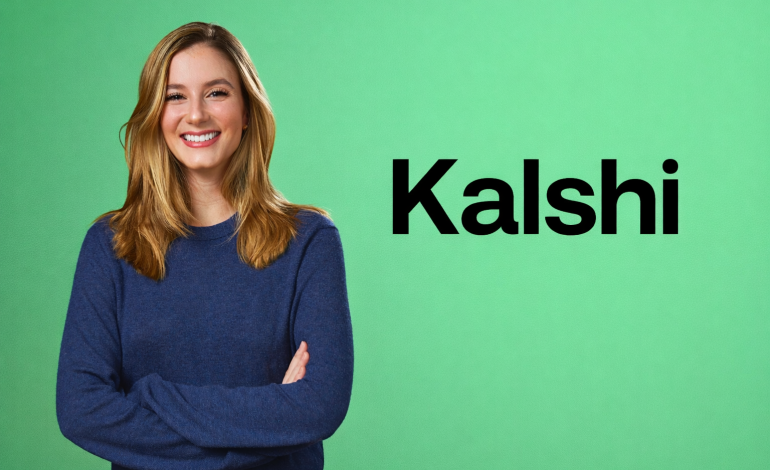
Kalshi was founded by Tarek Mansour and Luana Lopes Lara, who met while studying at the Massachusetts Institute of Technology (MIT).
They identified a gap in U.S. markets: while futures existed for commodities and financial instruments, there was no federally regulated exchange dedicated to event outcomes.
Turning that idea into reality required:
- Regulatory navigation
- Legal persistence
- Technical precision
- Capital investment
- Long-term patience
Innovation in financial infrastructure often moves slowly. Kalshi’s path reflects that reality.
Challenges Ahead
Event-based trading sits at the edge of traditional finance. As laws evolve and political landscapes shift, regulatory interpretations may change.
Kalshi must balance innovation with compliance. It must expand cautiously. It must continue educating users about how event contracts work.
Long-term sustainability will depend on:
- Strong governance
- Clear communication
- Regulatory alignment
- Market integrity
Financial history shows that trust compounds over time but it can erode quickly.
The Bigger Picture
Kalshi represents a broader shift in how people engage with uncertainty.
Traditional markets focus on assets. Event markets focus on outcomes.
This distinction matters. It changes how risk is isolated and how expectations are expressed.
Whether prediction markets become a permanent pillar of global finance remains to be seen. But Kalshi has already secured a place in U.S. financial history as the first federally regulated exchange dedicated to event contracts.
That milestone alone marks a structural development in modern derivatives markets.
About Co-Founder Luana Lopes Lara
Luana Lopes Lara is the co-founder and Chief Operating Officer of Kalshi. Originally from Brazil, she trained in classical ballet before transitioning into mathematics and computer science. She later studied at the Massachusetts Institute of Technology, where she met her future co-founder. Her background blends artistic discipline with analytical rigor. At Kalshi, she oversees operations and long-term strategy. Her career path from ballet studios to regulated financial markets reflects adaptability, focus, and persistence.